Canine guidance and group function
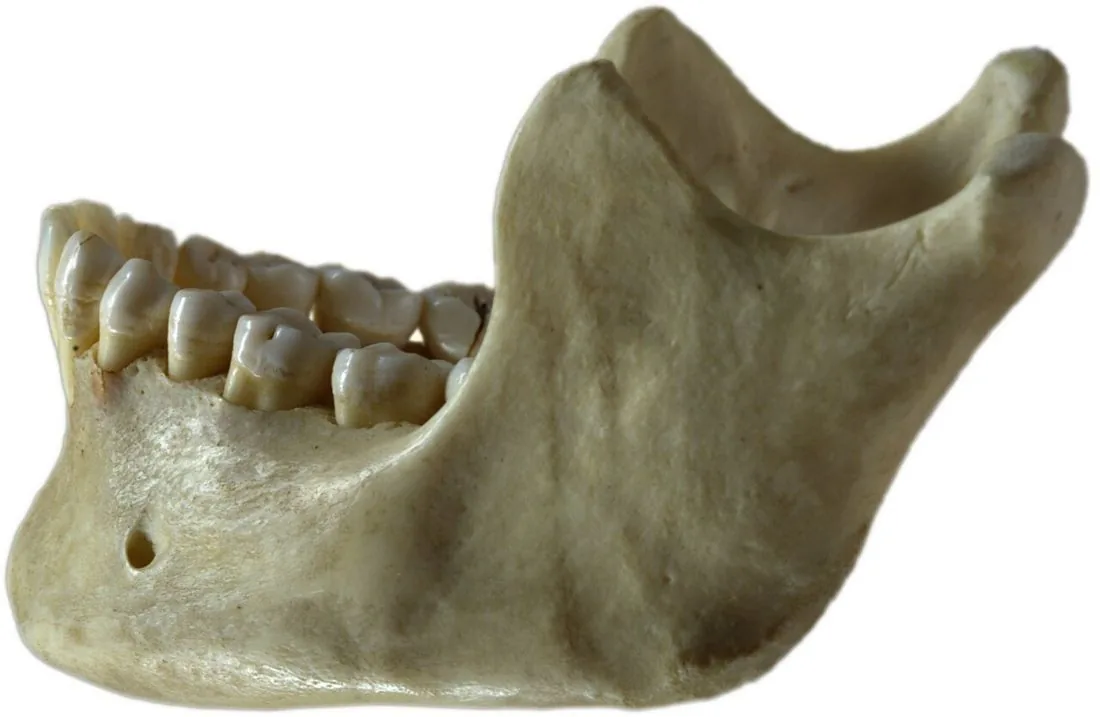
What you need to know
- D'Amico described how the upper canines guide the mandible in side-to-side movements.
- Group function: on the side the mandible moves toward, the canine and the back teeth touch at the same time.
- Mutually protected occlusion: the front teeth protect the back teeth during movements, and the back teeth protect the front teeth when the mouth closes.
- Working side: the side the mandible moves toward. Non-working side (or balancing side): the opposite one.
- The upper canine has a long, strong root: in a CT study it measured about 17 mm on average.
- Studies don't show a clear winner between canine guidance and group function.
Terms in plain words
Lateral movementMoving the mandible to one side.
DisocclusionWhen the back teeth stop touching during a movement.
For the exam
When the mandible moves to the right, the canine, premolars and molars on the right side touch. Which scheme is it?
Show answerHide answer
Group function.
Sources
- Tiwari B, et al. Occlusal Concepts in Full Mouth Rehabilitation: An Overview. J Indian Prosthodont Soc. 2014;14(4):344–351. View source
- Nelson SJ. Wheeler's Dental Anatomy, Physiology and Occlusion. 11th ed. Elsevier (textbook).
- Root Canal Morphology of Permanent Maxillary and Mandibular Canines in Indian Population Using Cone Beam Computed Tomography. View source
More from Orthodontics & Occlusion
Movement
Tooth movement in orthodontics (pressure and tension)
The tooth doesn't force its way through the bone: the bone rebuilds itself around it. It's resorbed on one side and formed on the other.
Angle
Angle's classification
Angle classifies the bite by how the mesiobuccal cusp of the upper first molar fits with the buccal groove of the lower first molar.
Bites
Overjet, overbite and types of bite
Besides the Angle class, you look at how the front teeth meet: the overjet (forward) and the overbite (downward).