Inferior alveolar nerve block
What you need to know
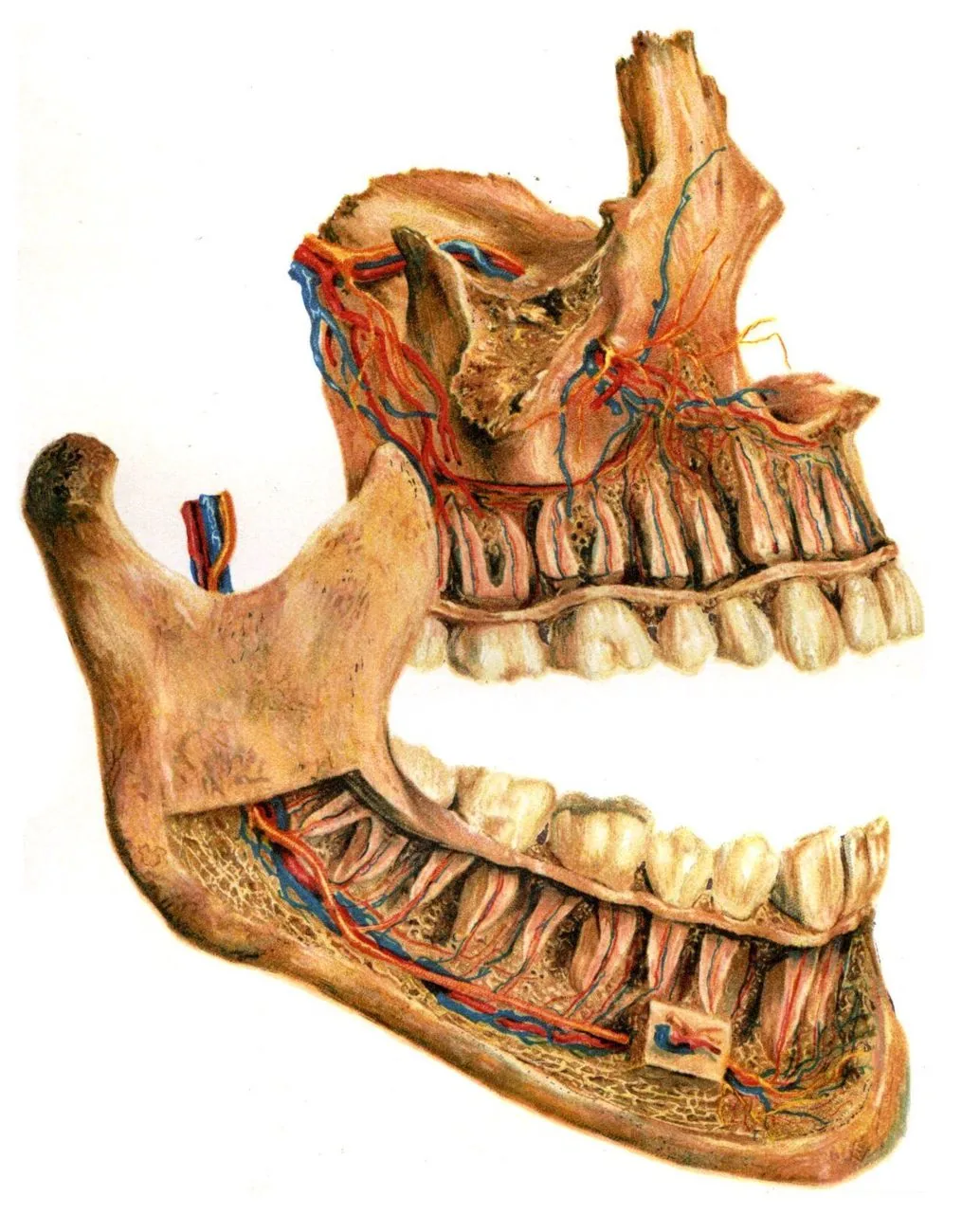
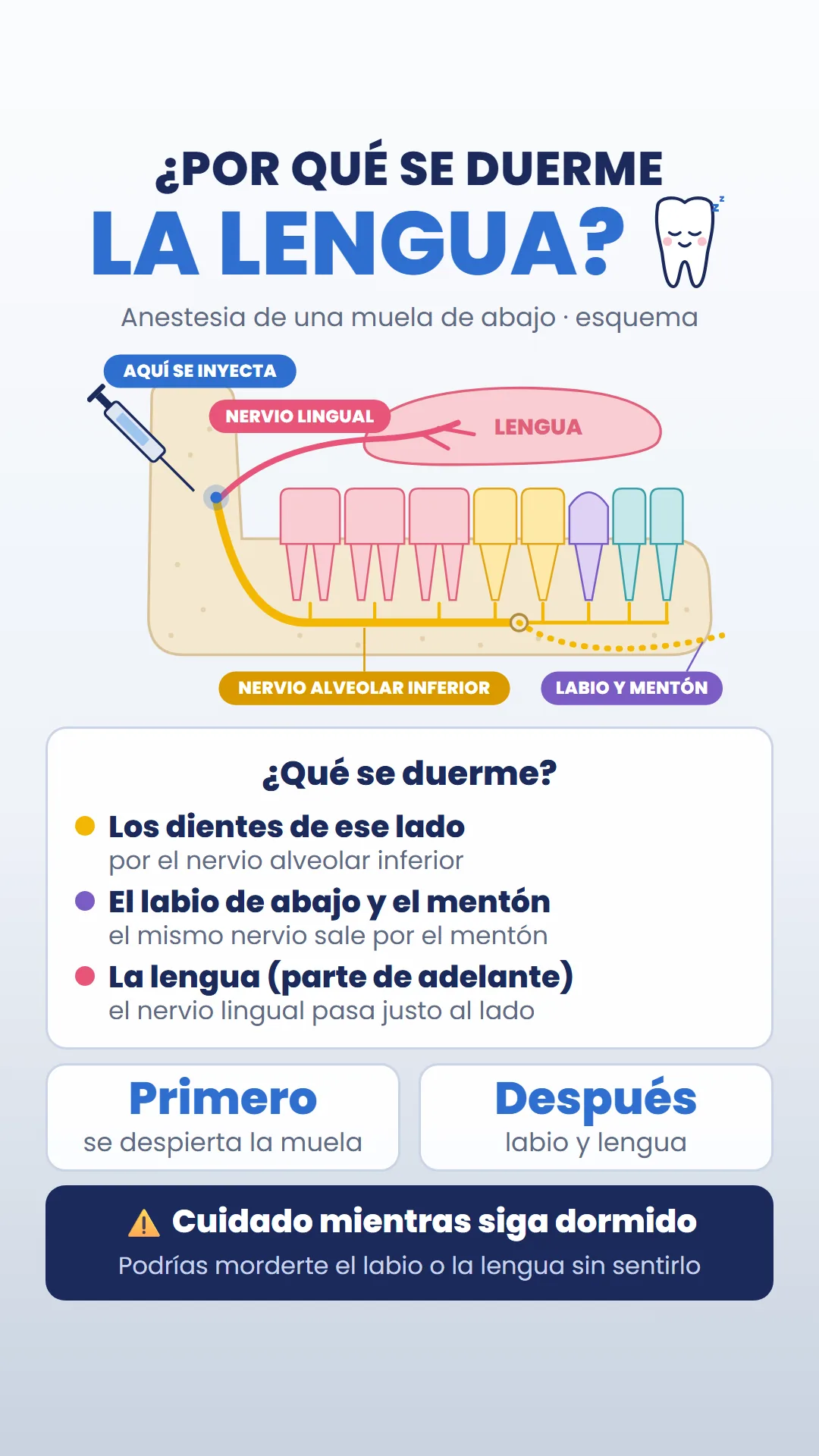
- The anesthetic is deposited near where the inferior alveolar nerve enters the mandible.
- It anesthetizes the lower teeth on that side and the bone. Its branch, the mental nerve, exits through the mental foramen (below the premolars) and gives sensation to the lower lip and chin.
- The lingual nerve is usually blocked too: the anterior two thirds of the tongue and the floor of the mouth go numb.
- The tooth gets its feeling back before the lip and tongue do: with all local anesthetics, soft tissue anesthesia lasts longer than that of the tooth and bone.
- While it lasts, the patient may bite their lip or cheek without feeling it, especially children. That's why you have to tell them how long it will last and keep an eye on them.
Terms in plain words
Nerve blockAnesthetic placed near the trunk of a nerve to numb everything that nerve innervates.
Lingual nerveNerve that gives sensation to the front part of the tongue; it runs very close to the inferior alveolar nerve.
For the exam
Why does the tongue go numb when a lower molar is anesthetized?
Show answerHide answer
Because the lingual nerve runs right next to the inferior alveolar nerve and almost always gets blocked too.
Sources
- Powers DB. How To Do an Inferior Alveolar Nerve Block. MSD Manual, Professional Version (2025 revision). View source
- American Academy of Pediatric Dentistry (AAPD). Use of Local Anesthesia for Pediatric Dental Patients. Reference Manual of Pediatric Dentistry, 2025:407–14. View source
More from Anesthesia
Anesthetics
How local anesthesia works
Local anesthesia switches off the nerve signal for a while: the pain doesn't reach the brain, but the person stays awake.
Nerves
Which nerve do you numb for each tooth?
To numb a tooth, you need to know which nerve gives it sensation: for the upper teeth it's the superior alveolar nerves, and for the lower teeth, the inferior alveolar nerve.
Safety
Safe anesthesia: aspiration, dosage and complications
Before injecting, you aspirate so you don't put the anesthetic into a blood vessel, you inject slowly, and you never go over the maximum dose based on weight.