Safe anesthesia: aspiration, dosage and complications
Step by step
- Review the medical history. In children, write down the weight to calculate the maximum dose.
- Apply topical anesthetic (gel) to the mucosa so the needle prick is less uncomfortable.
- Insert the needle and aspirate: if blood enters the cartridge, withdraw the needle 2 to 3 mm and aspirate again.
- Inject slowly (for the inferior alveolar nerve block, over 30 to 60 seconds).
- Wait about 5 to 10 minutes for it to take effect, while monitoring the patient.
- Write down which anesthetic was given and how much, and explain to the patient how long the numbness will last.
What you need to know
- The maximum dose is calculated per kilogram of body weight. In children, the AAPD recommends not going over 4.4 mg of lidocaine per kilogram (the manufacturer says 7 mg/kg) and always using the lowest dose that works.
- A 1.7 mL cartridge of 2% lidocaine contains 34 mg (2% = 20 mg in each mL).
- Example: a 20 kg child can receive at most 20 × 4.4 = 88 mg of lidocaine: about 2 and a half cartridges.
- Toxicity (overdose): the first signs are dizziness, anxiety and confusion; then double vision, ringing in the ears, drowsiness and tingling around the mouth. It can lead to seizures. If it appears, stop giving the anesthetic and activate the emergency response.
- Most reactions appear during the injection or within the next 5 to 10 minutes.
- Allergy to the anesthetic is rare. Often what the person calls an allergy was a reaction to the epinephrine or an injection into a blood vessel.
- Local complications: biting the lip or cheek while it's still numb (especially in children), hematoma (bruise), trismus (difficulty opening the mouth) and paresthesia (the numbness lasts longer than normal).
- The needle almost always breaks if it's bent before use or inserted all the way in. That's why it's never inserted to its full length.
- These numbers are for studying: in the clinic, follow your instructor's and the manufacturer's directions.
Maximum dose in children (AAPD)
| Anesthetic | Maximum per kilogram | Per 1.7 mL cartridge |
|---|---|---|
| Lidocaine 2% | 4.4 mg/kg | 34 mg |
| Articaine 4% | 7 mg/kg | 68 mg |
| Mepivacaine 3% | 4.4 mg/kg | 51 mg |
Terms in plain words
AspiratePull the plunger back slightly before injecting to see if the needle is inside a blood vessel (blood comes in).
Maximum doseThe largest amount of anesthetic that can be given without risk, based on weight.
TrismusDifficulty opening the mouth.
ParesthesiaNumbness or tingling that lasts longer than expected; it can happen if the needle injures the nerve.
CartridgeThe small glass tube with the anesthetic that goes inside the syringe.
For the exam
Why do you aspirate before injecting the anesthetic?
Show answerHide answer
To check that the needle isn't inside a blood vessel: that way you avoid an intravascular injection, which increases the risk of toxicity.
Sources
- American Academy of Pediatric Dentistry (AAPD). Use of Local Anesthesia for Pediatric Dental Patients. Reference Manual of Pediatric Dentistry, 2025:407–14. View source
- Powers DB. How To Do an Inferior Alveolar Nerve Block. MSD Manual, Professional Version (2025 revision). View source
More from Anesthesia
Anesthetics
How local anesthesia works
Local anesthesia switches off the nerve signal for a while: the pain doesn't reach the brain, but the person stays awake.
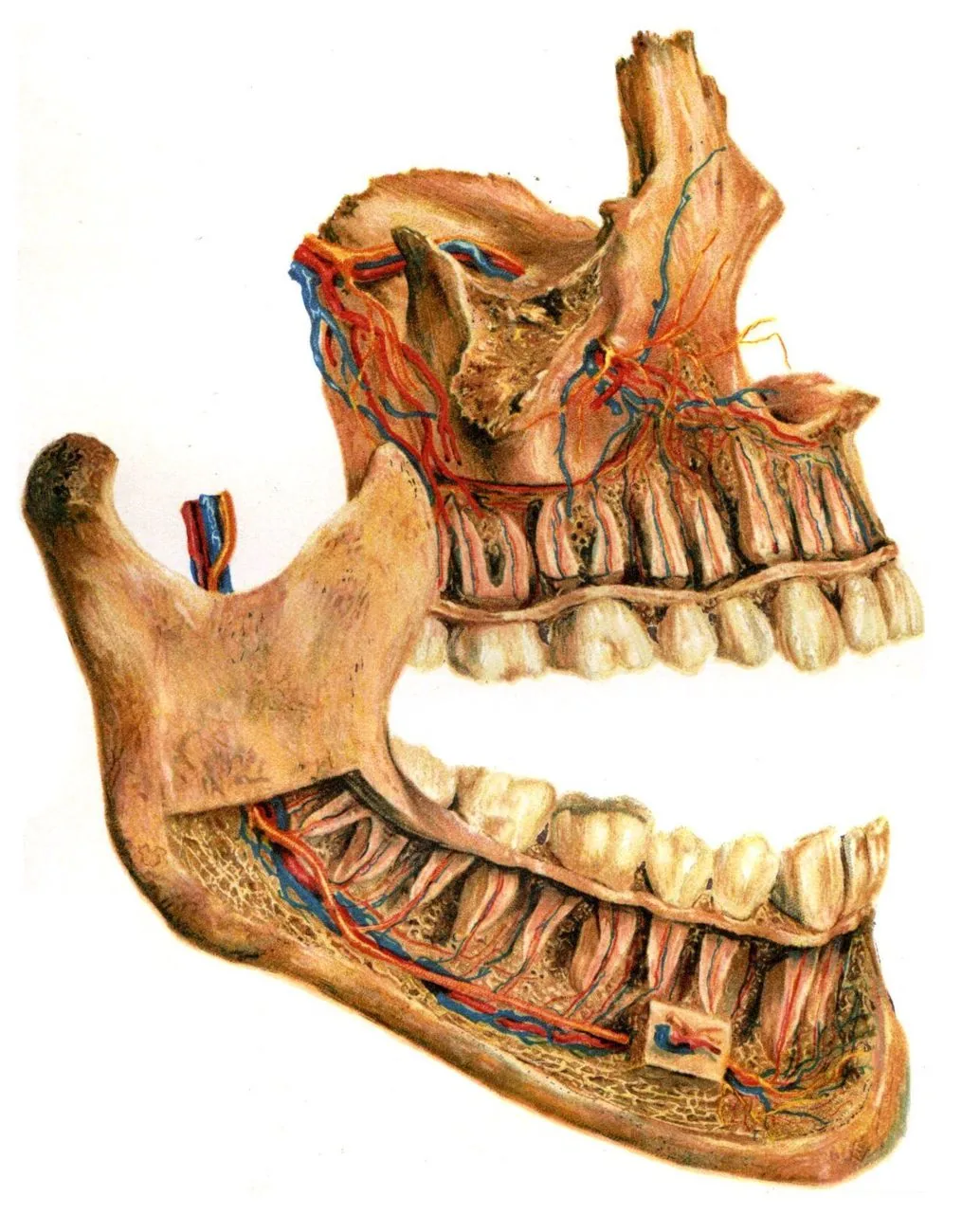
Anesthesia
Inferior alveolar nerve block
It numbs the lower teeth on that side, the lip and chin, and almost always the tongue too.
Nerves
Which nerve do you numb for each tooth?
To numb a tooth, you need to know which nerve gives it sensation: for the upper teeth it's the superior alveolar nerves, and for the lower teeth, the inferior alveolar nerve.