Black's classification
What you need to know
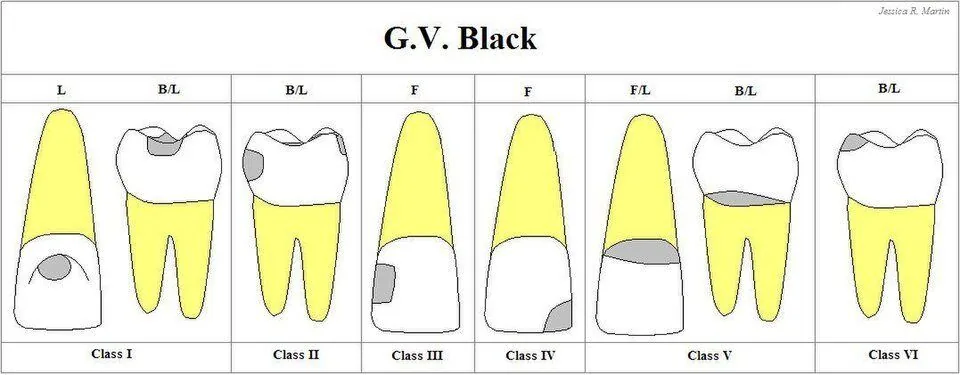
- Class I: pits and fissures. Occlusal surface of molars and premolars, buccal and lingual pits of molars, and palatal surface of upper incisors.
- Class II: proximal surfaces (mesial or distal) of molars and premolars.
- Class III: proximal surfaces of incisors and canines, without involving the incisal angle.
- Class IV: proximal surfaces of incisors and canines that do include the incisal angle.
- Class V: gingival (cervical) third of the facial or lingual surface of any tooth.
- Class VI (added by Simon): incisal edges or cusp tips, for example from wear.
- Today there are newer systems, such as ICDAS, that also measure how advanced the lesion is.
Terms in plain words
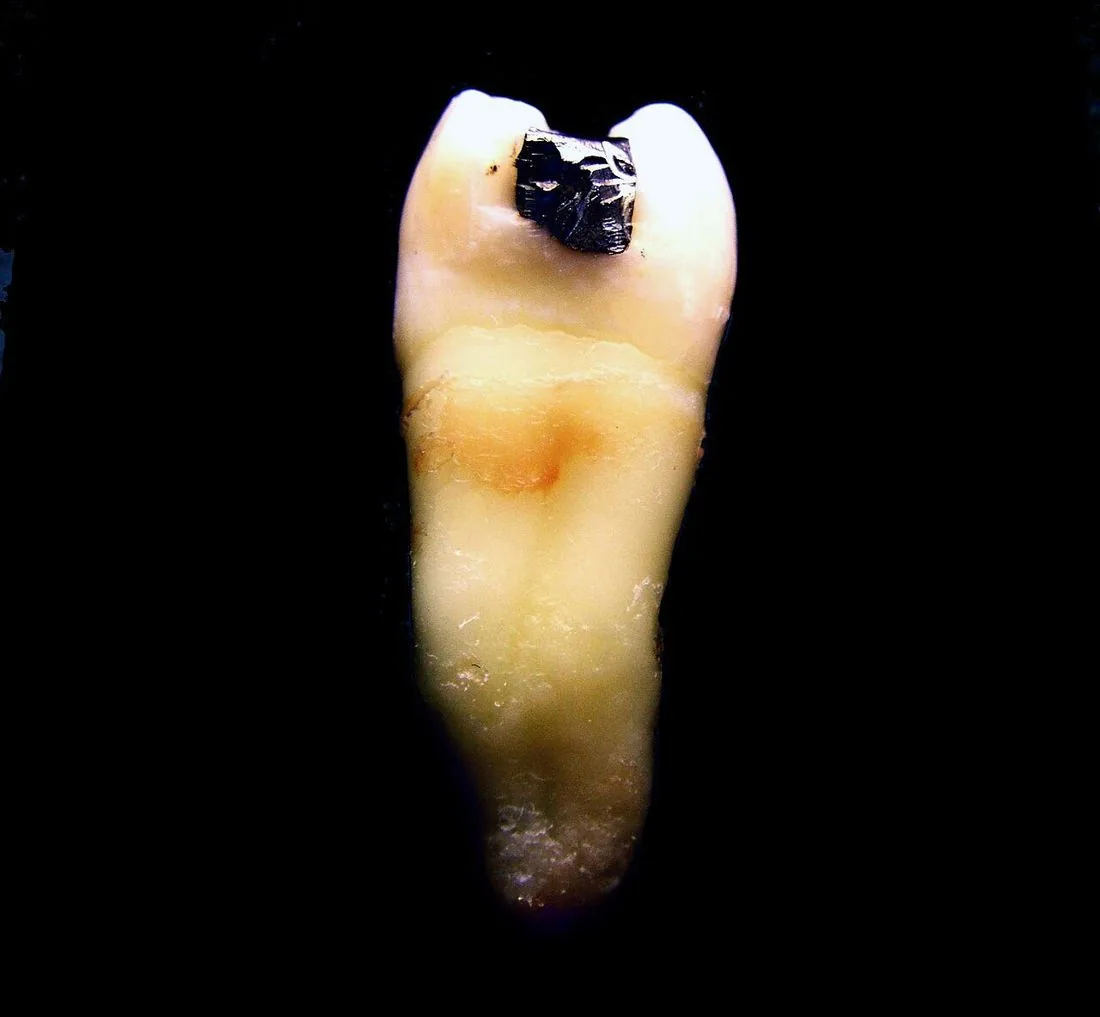
ProximalSurface of the tooth that touches the neighboring tooth (mesial or distal).
Incisal angleThe corner of the edge of an incisor or canine.
Gingival thirdThe part of the crown closest to the gums.
For the exam
Caries on the distal surface of a canine that has broken the incisal angle. Which class is it?
Show answerHide answer
Class IV.
Sources
- Sturdevant's Art and Science of Operative Dentistry. Elsevier (textbook).
- Pai S, et al. Association of age with class VI composite restoration. Bioinformation. 2020. View source
More from Cariology & Operative Dentistry
Caries
Stages of caries
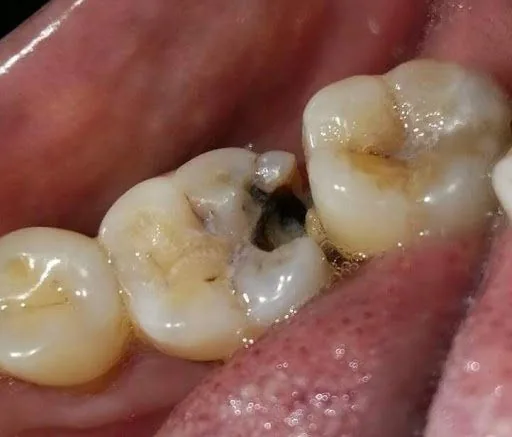
Caries progresses from the outside in: enamel → dentin → pulp. While it is only in the enamel, it can still be remineralized.
Factors
Factors behind caries
For caries to occur, 4 factors have to come together: a susceptible tooth, bacteria, sugars and time.
Fluoride
How fluoride protects
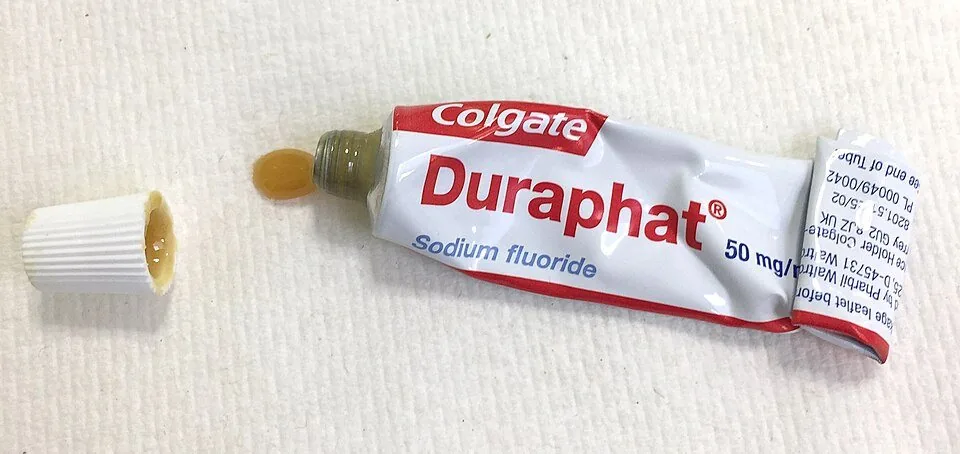
Fluoride helps with remineralization, makes enamel more resistant to acid and can reduce the acid made by bacteria.