How fluoride protects
What you need to know
- It replaces the minerals that acid takes from the tooth. Some of the fluoride stays on the surface and makes the enamel harder to dissolve.
- It can reduce the acid that bacteria produce and make them stick less to the tooth.
- Before the tooth erupts, fluoride can be incorporated into the enamel while it is forming.
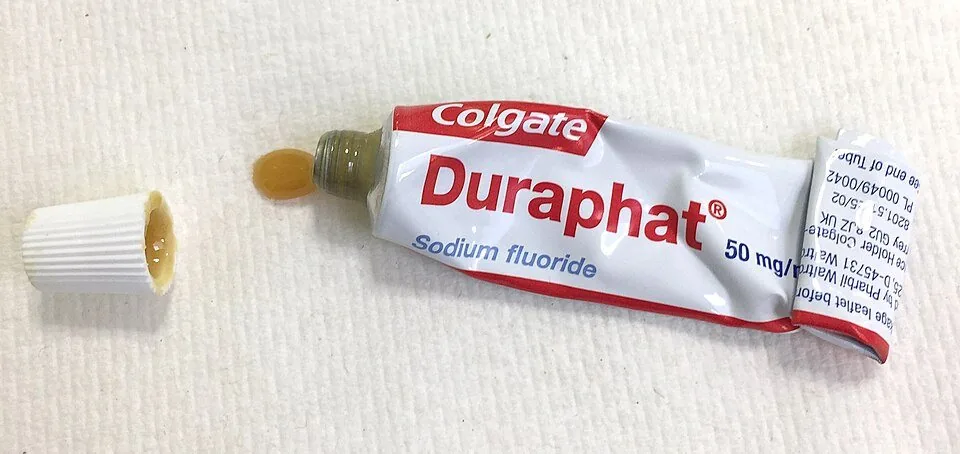
- Sources: fluoridated water, toothpaste, mouth rinses, varnish, gel or foam, and supplements for high-risk children.
- Too much fluoride while the teeth are forming can cause dental fluorosis.
Terms in plain words
RemineralizationRecovery of enamel minerals; fluoride speeds it up.
Fluoride varnishHigh-fluoride product applied by a professional and reapplied periodically.
FluorosisSpots on the enamel from too much fluoride while the tooth is forming.
For the exam
What is the most widely used fluoride product?
Show answerHide answer
Fluoride toothpaste (according to the CDC, in the U.S.).
Sources
- CDC (Centers for Disease Control and Prevention). About Fluoride, 2024. View source
- Hennessy BJ. Caries. MSD Manual, Professional Version (2026 revision). View source
More from Cariology & Operative Dentistry
Caries
Stages of caries
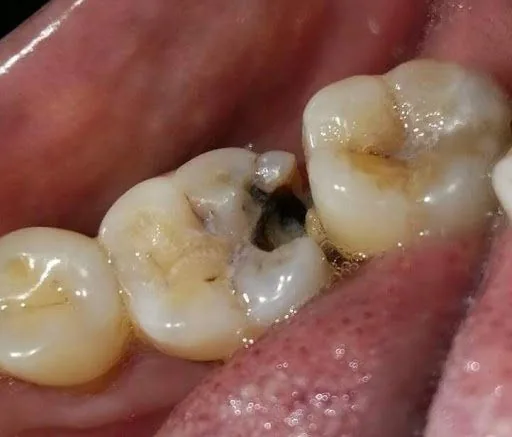
Caries progresses from the outside in: enamel → dentin → pulp. While it is only in the enamel, it can still be remineralized.
Black
Black's classification
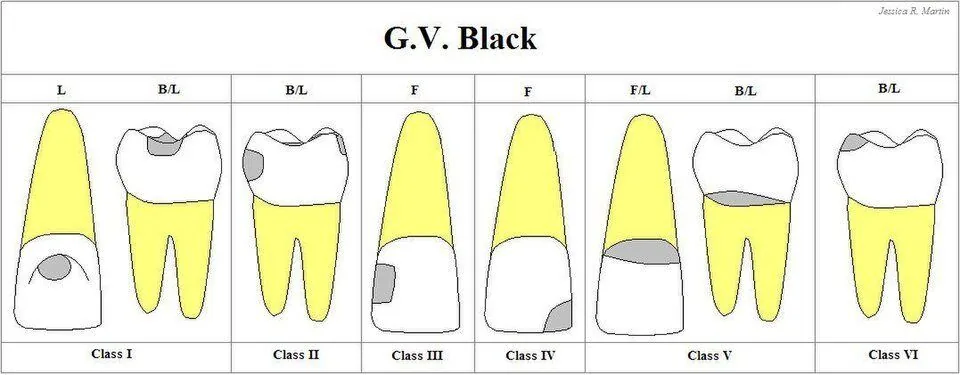
G. V. Black classified caries and cavities by where they are on the tooth: Classes I to V, and Class VI was added later.
Factors
Factors behind caries
For caries to occur, 4 factors have to come together: a susceptible tooth, bacteria, sugars and time.