Stages of caries
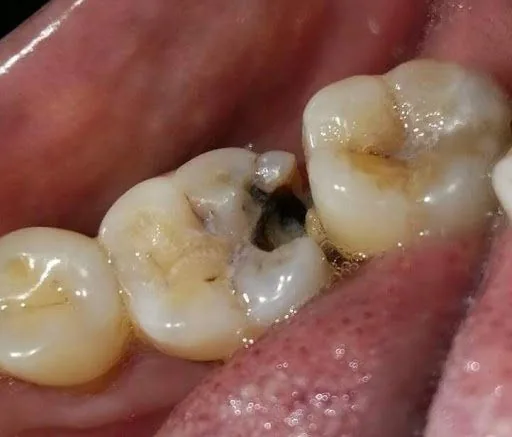
What you need to know
- Enamel: it starts as an opaque white spot lesion and does not hurt. It can be remineralized with fluoride, better hygiene and checkups.
- Dentin: a cavity appears, along with pain from cold, heat or sweets. It is treated by removing the caries and restoring the tooth.
- Pulp: inflammation of the pulp (pulpitis) causes intense, lasting pain.
- If it is not treated, the pulp dies and an abscess can form at the tip of the root.
- Radiographs are the most important tool for finding caries and seeing how deep it is.
ICDAS codes (what the caries looks like)
| Code | What you see |
|---|---|
| 0 | Sound surface |
| 1 | First change in the enamel (only seen after drying) |
| 2 | Distinct change in the enamel (seen when wet) |
| 3 | Small break in the enamel |
| 4 | Dark shadow from the dentin underneath |
| 5 | Cavity with visible dentin |
| 6 | Large cavity (more than half of the surface) |
Terms in plain words
DemineralizationLoss of minerals from the tooth caused by acid from bacteria.
RemineralizationRecovery of those minerals, helped by saliva and fluoride.
CavitationWhen the surface breaks and a hole is left.
For the exam
At what stage can caries still be reversed without drilling?
Show answerHide answer
When it is only in the enamel (initial lesion): it is remineralized with fluoride, hygiene and checkups.
Sources
- Hennessy BJ. Caries. MSD Manual, Professional Version (2026 revision). View source
- Gugnani N, et al. International Caries Detection and Assessment System (ICDAS): A New Concept. Int J Clin Pediatr Dent. 2011. View source
More from Cariology & Operative Dentistry
Black
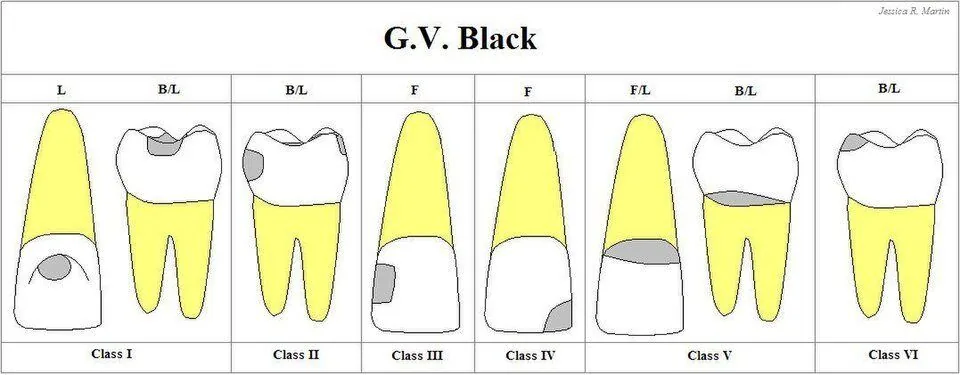
Black's classification
G. V. Black classified caries and cavities by where they are on the tooth: Classes I to V, and Class VI was added later.
Factors
Factors behind caries
For caries to occur, 4 factors have to come together: a susceptible tooth, bacteria, sugars and time.
Fluoride
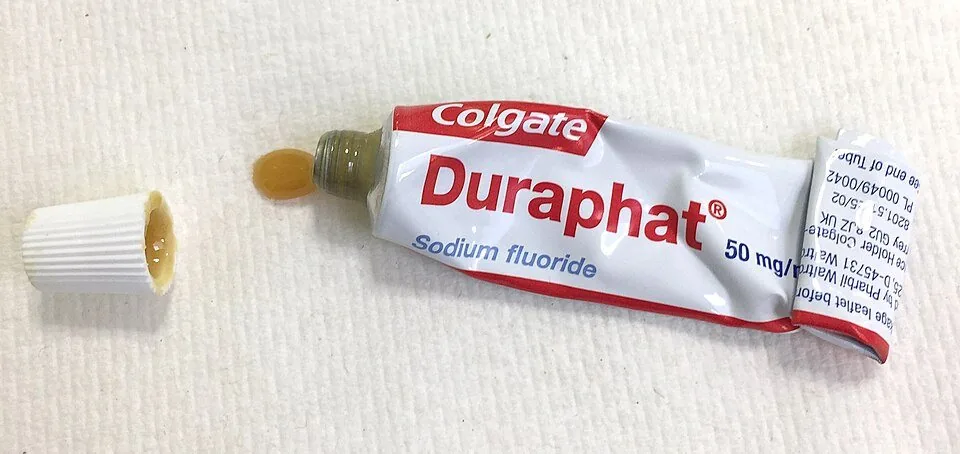
How fluoride protects
Fluoride helps with remineralization, makes enamel more resistant to acid and can reduce the acid made by bacteria.