Pit and fissure sealants
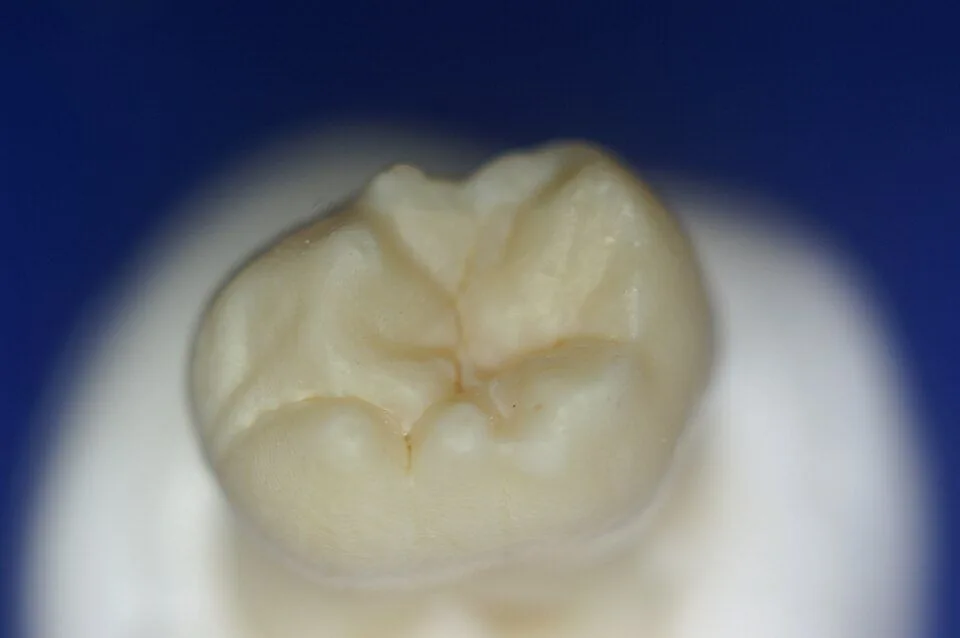
What you need to know
- They are placed mainly on the chewing surfaces of the back teeth, on primary and permanent teeth.
- Placed soon after the permanent molars erupt, they prevent up to 80% of cavities for 2 years and 50% for up to 4 years.
- The first molar erupts at around age 6 and the second at around age 12: these are good times to seal.
- Steps: clean and dry the tooth, apply an acid gel that roughens the surface so the sealant sticks, rinse and dry again, apply the sealant to the grooves and harden it with blue light (some materials harden on their own).
- They help exactly where fluoride protects less: in deep pits and fissures.
Terms in plain words
Pit and fissureTiny holes and grooves on the occlusal surface where debris and bacteria get trapped.
Resin sealantMaterial that bonds to the enamel and covers the fissures.
For the exam
Why seal the back teeth if we already use fluoride?
Show answerHide answer
Because fluoride protects less in deep pits and fissures; the sealant covers those grooves.
Sources
- CDC. About Dental Sealants, 2024. View source
- American Dental Association (MouthHealthy). Dental Sealants (steps for placing them). View source
- Hennessy BJ. Caries. MSD Manual, Professional Version (2026 revision). View source
More from Cariology & Operative Dentistry
Caries
Stages of caries
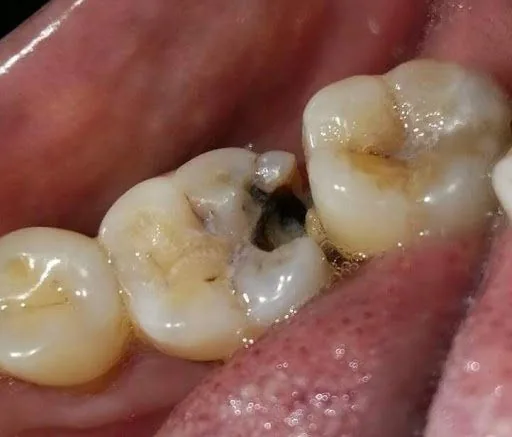
Caries progresses from the outside in: enamel → dentin → pulp. While it is only in the enamel, it can still be remineralized.
Black
Black's classification
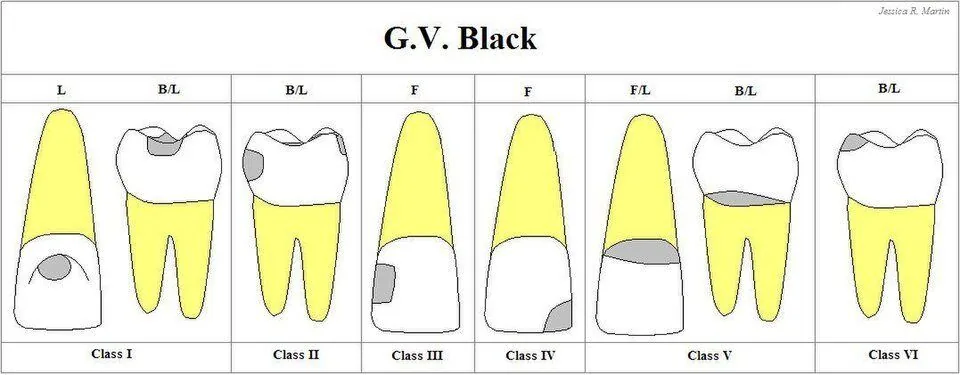
G. V. Black classified caries and cavities by where they are on the tooth: Classes I to V, and Class VI was added later.
Factors
Factors behind caries
For caries to occur, 4 factors have to come together: a susceptible tooth, bacteria, sugars and time.