Gingival recession: Miller and Cairo classifications
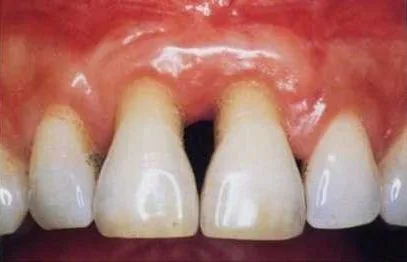
What you need to know
- Main causes: plaque-induced inflammation and traumatic (too hard) brushing.
- Predisposing factors: thin gingiva, little keratinized gingiva (less than 2 mm), high frenum, orthodontic movement, restorations below the gumline and smoking.
- Miller expected surgery to cover the whole root in Classes I and II, only part of it in Class III and none of it in Class IV.
- Cairo (2011), used in the 2017 World Workshop classification: RT1 no attachment loss between the teeth; RT2 loss between the teeth less than or equal to the buccal loss; RT3 loss between the teeth greater than the buccal loss.
Miller classification (1985)
| Class | Reaches the mucogingival junction? | Loss between the teeth |
|---|---|---|
| I | No | No |
| II | Yes, or goes past it | No |
| III | Yes, or goes past it | Yes (bone or gingiva), or malpositioned tooth |
| IV | Yes, or goes past it | Severe, or severe malposition |
Terms in plain words
Cementoenamel junctionThe line where the enamel ends and the cementum begins.
Mucogingival junctionThe boundary between the firm (keratinized) gingiva and the movable mucosa.
Keratinized gingivaFirm gingiva, attached to the bone, that protects the root.
For the exam
Recession that goes past the mucogingival junction, with no loss of bone or gingiva between the teeth. Which Miller class is it?
Show answerHide answer
Class II.
Sources
- Fageeh HI, et al. Assessing the Reliability of Miller's Classification and Cairo's Classification in Classifying Gingival Recession Defects. Medicina (Kaunas). 2024;60(2):205. View source
More from Periodontics
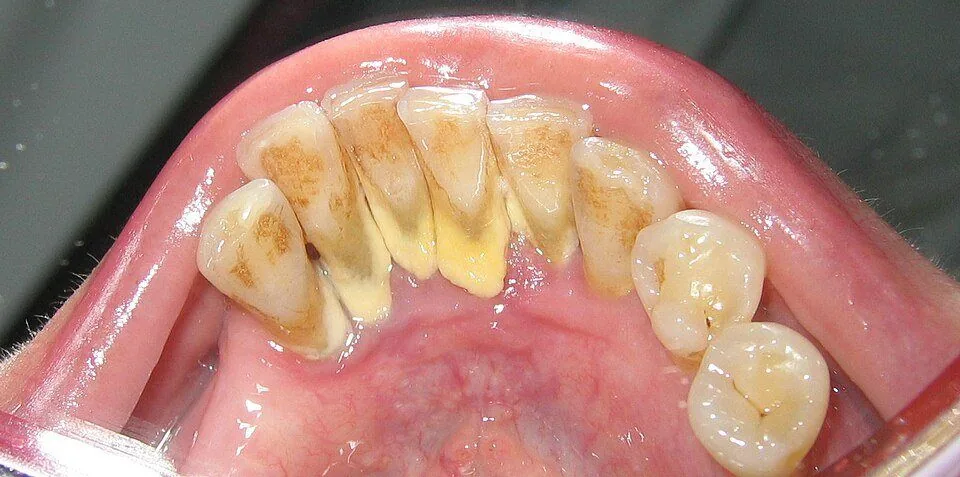
Calculus
How calculus forms
Calculus is bacterial plaque that has mineralized with the calcium and phosphate in saliva.
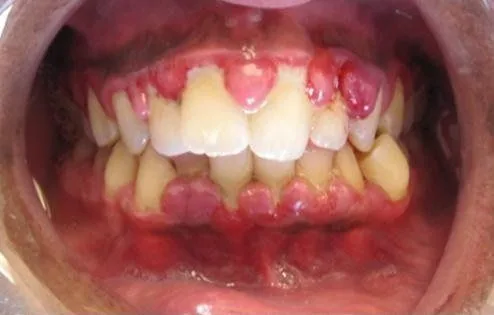
Gingiva
Gingivitis vs. periodontitis
Gingivitis inflames only the gingiva. Periodontitis also destroys the ligament and the bone that support the tooth.
Mobility
Tooth mobility grades
Mobility is measured in grades according to how much the crown moves: from 0 (normal) to 3 (severe).