Pulp diagnosis: tests and terminology (AAE)
Step by step
- Medical and dental history: treatments, medications.
- What is wrong: how long it has hurt, how, where, what triggers it and what relieves it.
- Clinical exam: face, gingiva, caries, restorations, fistulas and mobility.
- Pulp tests: cold, heat and the electric test.
- Tests of the apical area (the tip of the root): percussion, palpation and biting.
- Radiographs (at least 2 new periapicals) and, if needed, extra tests.
What you need to know
- Always test a healthy tooth first (a neighbor or one on the other side): that way the patient knows what a normal response is, and you can compare.
- Normal pulp: with cold, the patient feels something mild that goes away in 1 or 2 seconds.
- Reversible pulpitis: cold or sweets cause discomfort that goes away in a couple of seconds; it does not hurt on its own. If the cause is removed, the pulp returns to normal.
- Symptomatic irreversible pulpitis: the pain lingers (often 30 seconds or more), it can hurt on its own and be felt somewhere else (referred pain). It needs root canal treatment.
- Asymptomatic irreversible pulpitis: it does not hurt, but there is deep caries or trauma that will leave the pulp exposed. It also needs a root canal.
- Pulp necrosis: the pulp has died and does not respond to tests. Heads up: a tooth can also fail to respond because of calcifications or recent trauma.
- Apical area: if it hurts on biting or percussion, it is symptomatic apical periodontitis. If there is a dark area on the radiograph but it does not hurt, it is asymptomatic.
- Chronic apical abscess: little or no pain, and pus that drains from time to time through a fistula. Acute apical abscess: severe pain, swelling and, sometimes, fever.
Response to cold (once it is removed)
| Diagnosis | What the patient feels |
|---|---|
| Normal pulp | Something mild that goes away in 1–2 seconds |
| Reversible pulpitis | Discomfort that goes away in a couple of seconds |
| Symptomatic irreversible pulpitis | Pain that lingers (often 30 s or more) |
| Pulp necrosis | Feels nothing |
Terms in plain words
Vitality testA test (cold, heat or electric) to see if the pulp responds.
FistulaA small channel through which pus drains out to the gingiva (also called a sinus tract).
Referred painPain felt in another tooth or in another part of the face.
Apical periodontitisInflammation around the tip of the root.
For the exam
A tooth does not respond to cold, hurts on biting, and the radiograph shows a dark area at the tip of the root. What is the diagnosis?
Show answerHide answer
Pulp necrosis with symptomatic apical periodontitis.
Sources
- American Association of Endodontists (AAE). Endodontic Diagnosis. Endodontics: Colleagues for Excellence, Fall 2013. View source
- Hennessy BJ. Toothache and Infection. MSD Manual, Professional Version (2026 revision). View source
More from Endodontics
Root canal
Root canal treatment, step by step
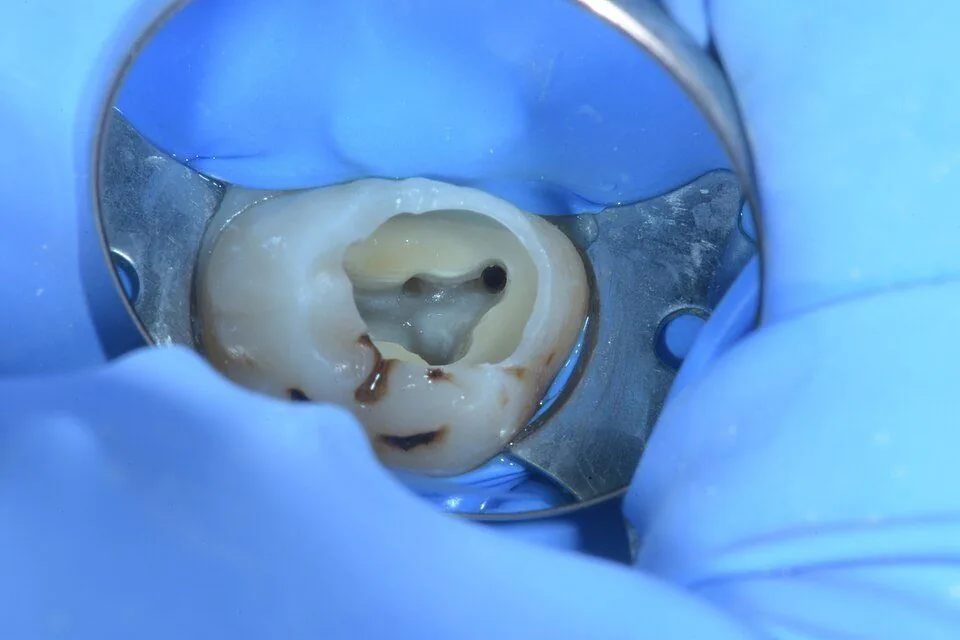
In root canal treatment, the inflamed or infected pulp is removed, the inside is cleaned and disinfected, and it is filled and sealed.
Pulpitis
Reversible vs. irreversible pulpitis
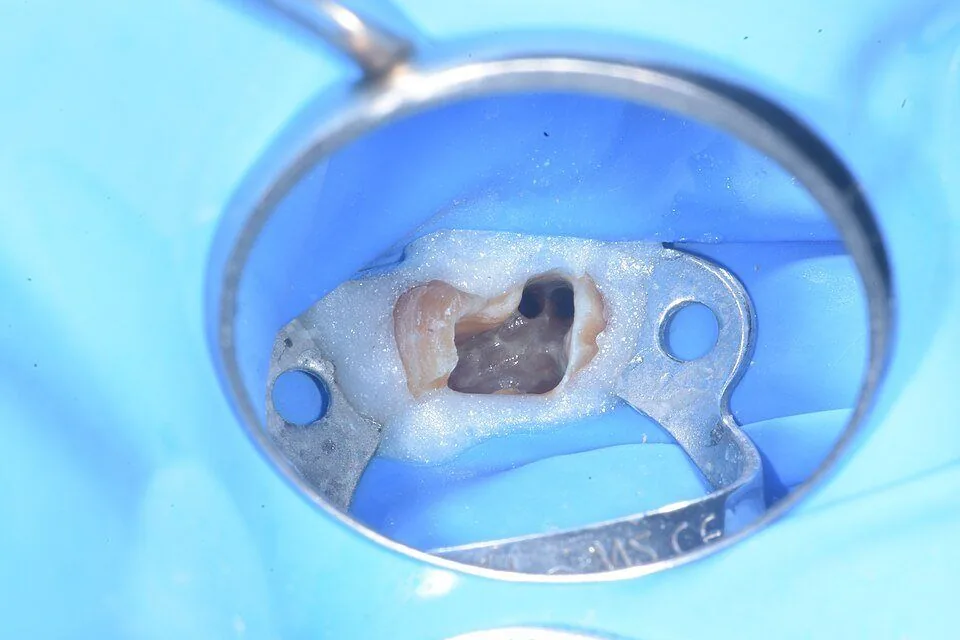
In reversible pulpitis, the pain goes away when the stimulus is removed. In irreversible pulpitis, the pain is spontaneous or lingers after the stimulus.
Abscess
How an abscess forms
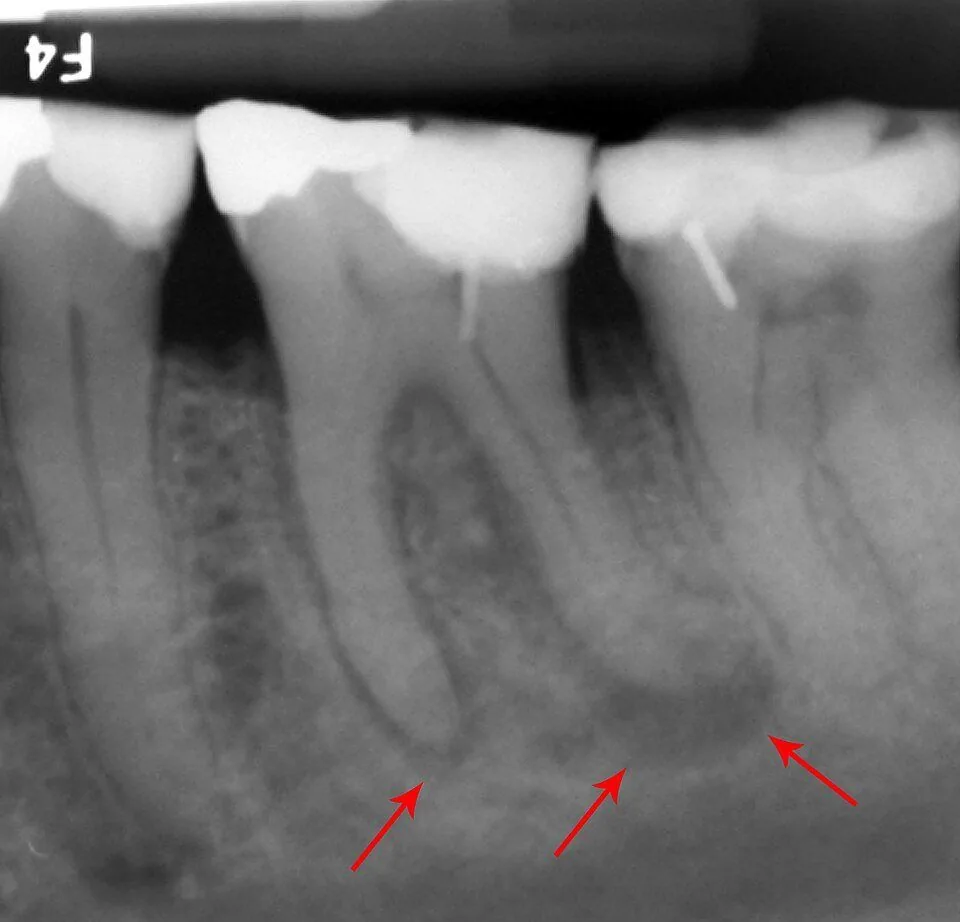
A periapical abscess develops when the pulp dies and the infection exits through the tip of the root into the bone.