How an abscess forms
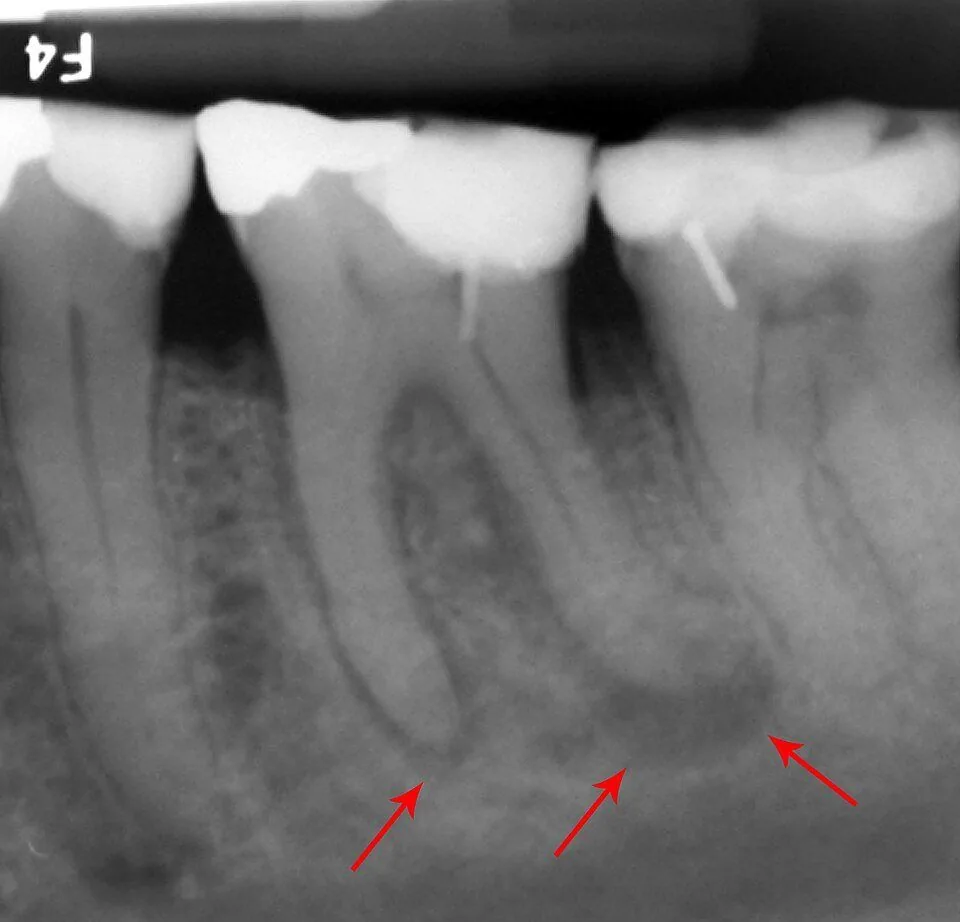
What you need to know
- Sequence: caries → pulpitis → pulp necrosis → apical periodontitis or abscess.
- Signs: constant pain that gets worse on biting, the tooth hurts when tapped gently (percussion), and there may be swelling of the gingiva, cheek or lip.
- The pus can drain through the gingiva or spread into the tissues of the face (cellulitis).
- Warning signs: fever, swelling of the floor of the mouth or difficulty swallowing (Ludwig's angina). It is an emergency.
- Treatment: remove the source of the infection (root canal or extraction) and drain the pus if needed. Antibiotics are used if the infection spreads or same-day care is not available.
Terms in plain words
PeriapicalAround the tip (apex) of the root.
Percussion testGentle taps on the tooth: if it hurts, there is inflammation around the root.
Ludwig's anginaA severe infection of the floor of the mouth that can close off the airway.
For the exam
Which test is usually positive in a periapical abscess?
Show answerHide answer
Percussion: gently tapping the tooth causes pain.
Sources
- Hennessy BJ. Toothache and Infection. MSD Manual, Professional Version (2026 revision). View source
More from Endodontics
Root canal
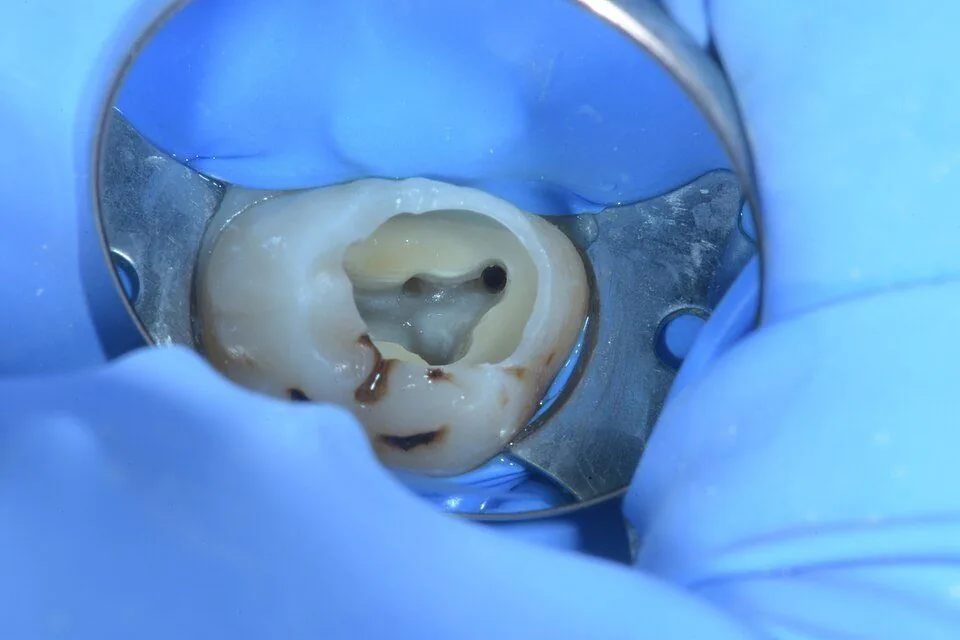
Root canal treatment, step by step
In root canal treatment, the inflamed or infected pulp is removed, the inside is cleaned and disinfected, and it is filled and sealed.
Diagnosis
Pulp diagnosis: tests and terminology (AAE)
To find out the condition of the pulp, you compare the tooth with its neighbors using cold, percussion, palpation and radiographs.
Pulpitis
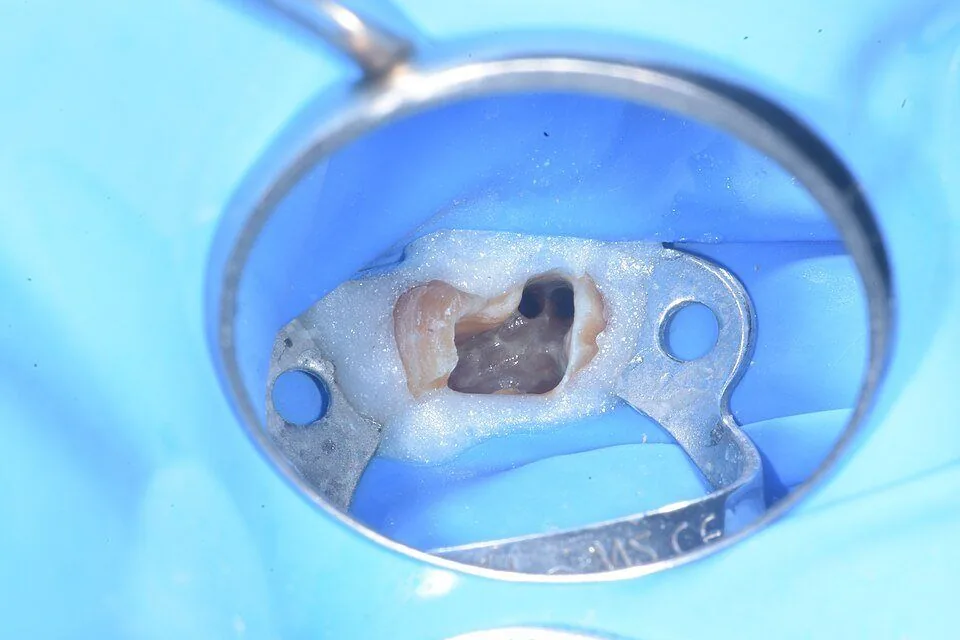
Reversible vs. irreversible pulpitis
In reversible pulpitis, the pain goes away when the stimulus is removed. In irreversible pulpitis, the pain is spontaneous or lingers after the stimulus.