Reversible vs. irreversible pulpitis
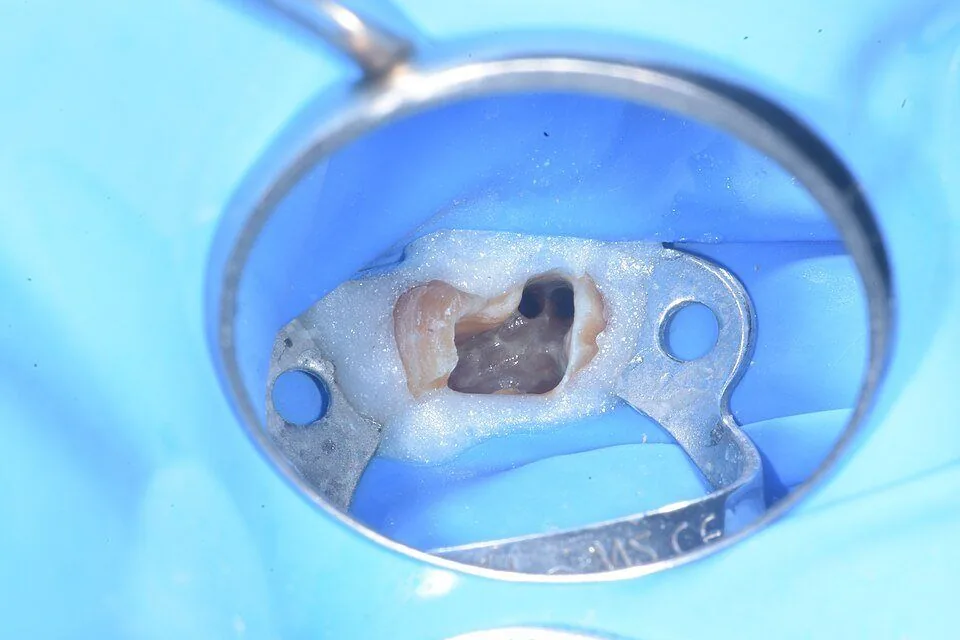
What you need to know
- Causes: advancing caries, large or faulty restorations, and trauma.
- Reversible: it hurts only with a stimulus (cold, sweets) and eases when the stimulus is removed. The pulp can recover if the cause is eliminated.
- Irreversible: spontaneous pain (it comes on by itself), or pain that lingers after the stimulus is removed; according to the AAE, often 30 seconds or more. It is treated by removing the pulp (root canal) or extracting the tooth.
- Cold test: in a healthy tooth the pain goes away almost immediately. If it lingers for more than a few seconds, there is damage to the pulp.
- Antibiotics have not shown a clear benefit in irreversible pulpitis.
- If the pulp dies (necrosis), the pain may go away for hours or weeks, but the infection keeps moving toward the tip of the root.
How to tell them apart
| Reversible | Irreversible | |
|---|---|---|
| Pain | Only with a stimulus | Spontaneous or lingering |
| When the cold is removed | Goes away in a couple of seconds | Lingers (often 30 s or more) |
| Treatment | Remove the cause and protect the pulp | Root canal or extraction |
Terms in plain words
PulpitisInflammation of the pulp.
Pulp necrosisDeath of the pulp.
Cold testCold is applied to the tooth to see how the pulp responds.
For the exam
Pain that lasts several minutes after having something cold. Reversible or irreversible?
Show answerHide answer
Irreversible: pain that lingers after the stimulus indicates damage that does not recover.
Sources
- Hennessy BJ. Toothache and Infection. MSD Manual, Professional Version (2026 revision). View source
- American Association of Endodontists (AAE). Endodontic Diagnosis. Endodontics: Colleagues for Excellence, Fall 2013. View source
More from Endodontics
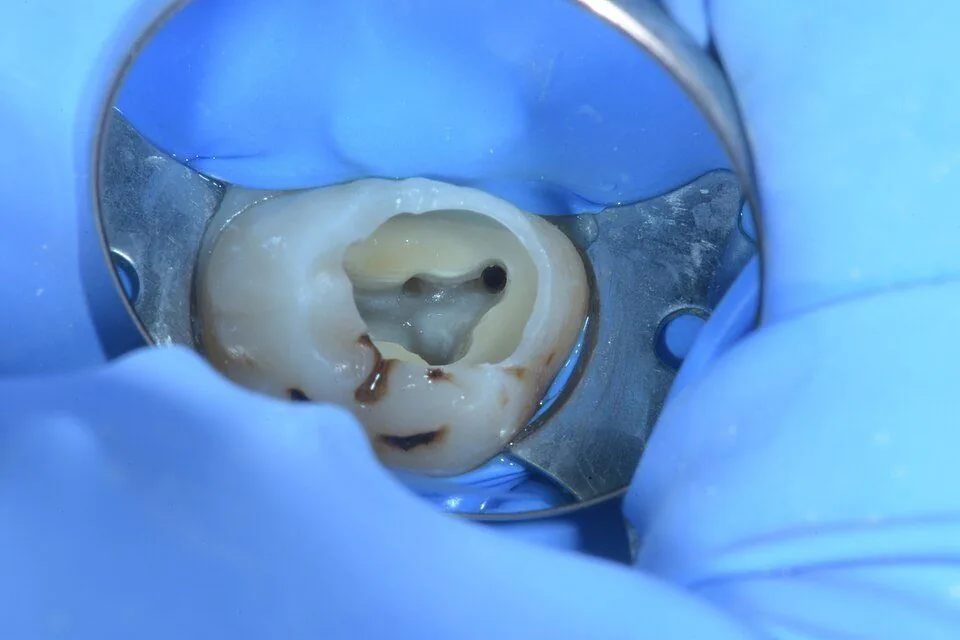
Root canal
Root canal treatment, step by step
In root canal treatment, the inflamed or infected pulp is removed, the inside is cleaned and disinfected, and it is filled and sealed.
Diagnosis
Pulp diagnosis: tests and terminology (AAE)
To find out the condition of the pulp, you compare the tooth with its neighbors using cold, percussion, palpation and radiographs.
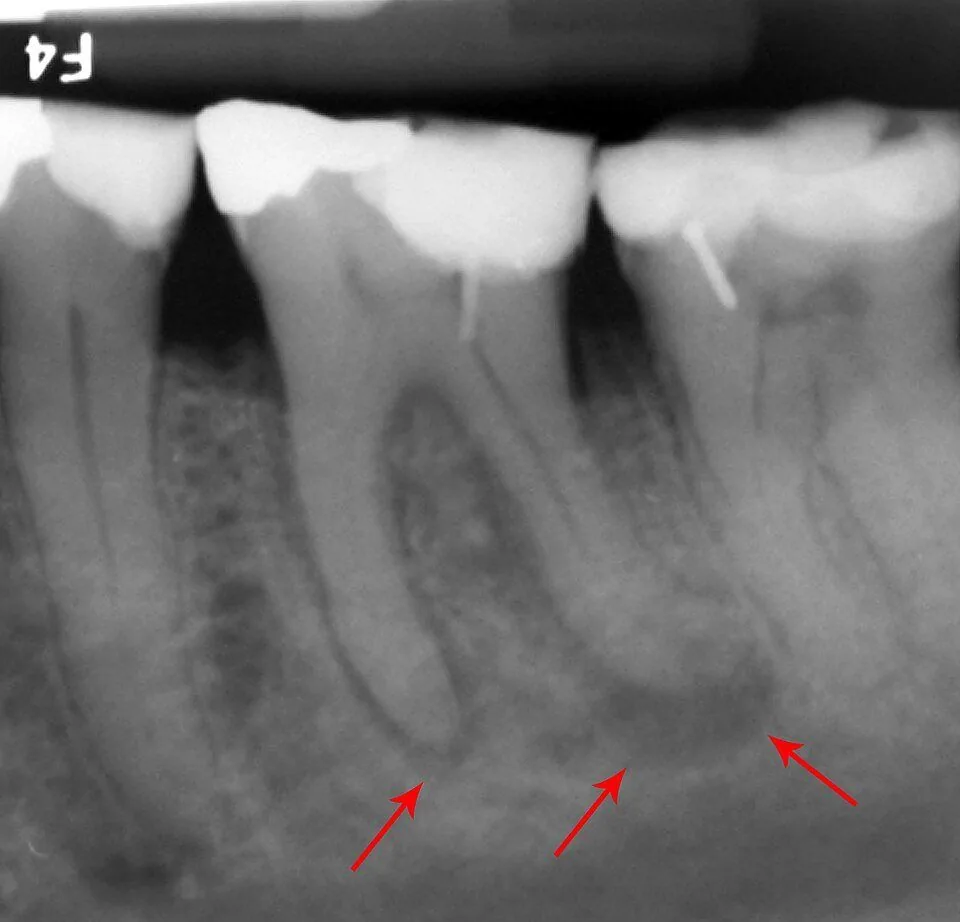
Abscess
How an abscess forms
A periapical abscess develops when the pulp dies and the infection exits through the tip of the root into the bone.